Previous Results
Next Banzuke Prediction
What is this Site?
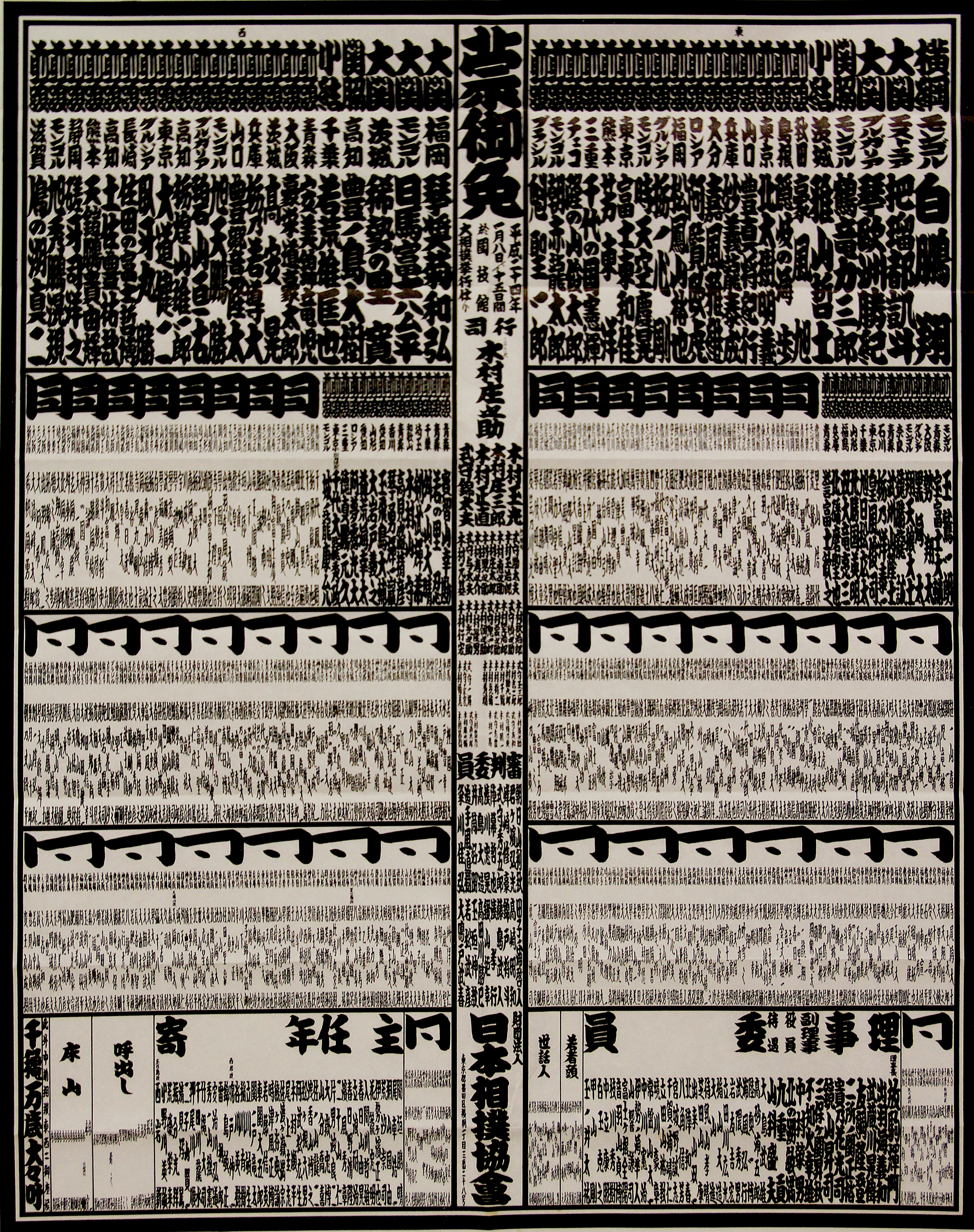
This site is a tool to assist sumo fans playing Guess the Banzuke (GTB), where we predict what the new wrestler rankings will be after a tournament finishes. Wrestlers (called "rikishi") are all ranked from #1 on down prior to every tournament in a big list called a banzuke.
The rankings are ultimately subjective decisions by the Japanese Sumo Association. There are some general rules used however, and this app assists with calculations and highlighting information relevant to these rules, in addition to providing a convenient interface for organizing picks.
The picks made here can be copied to the GTB site, which is the centralized place of competition.
This site also supports its own submissions and scoring in the Results page, since picks are already here I figured might as well. The scoring system used is slightly different from GTB.
Sumo Rankings Explained, Briefly
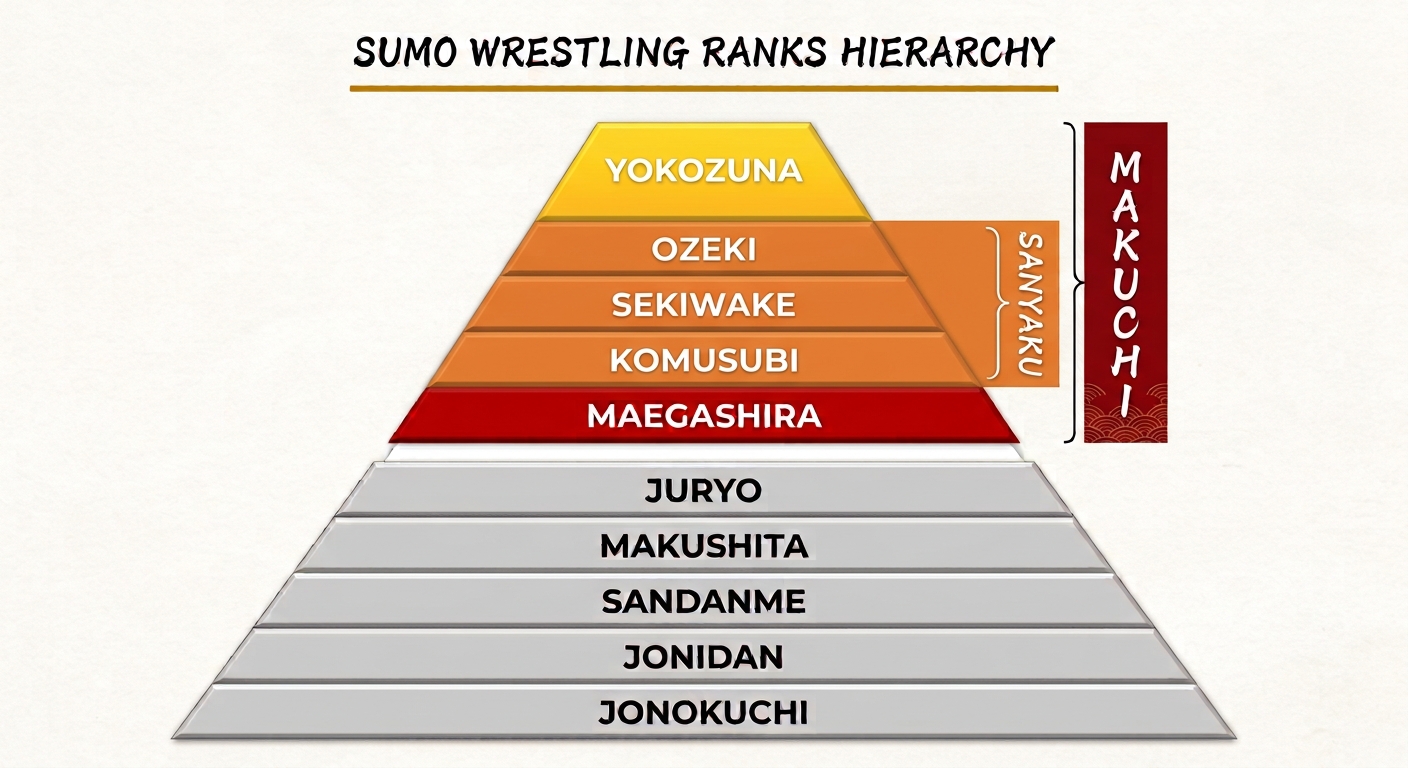
There are 6 ranked divisions in sumo, with most fan focus on the top division: Makuuchi. The ranks at the top of makuuchi are special "titled" ranks (yokozuna, ozeki, sekiwake, komusubi). The rest of the slots are the standard rank-and-file ranks, called maegashira, which form the bulk of the division (30+ out of 42 total).
Each row of the banzuke has two rikishi slots: East and West. The East slot is considered a half step up from its West slot, otherwise there's not much modern significance. Example: Maegashira 1 East > Maegashira 1 West > Maegashira 2 East.
A new banzuke is created after each tournament based on the performances of each rikishi.
The Main Rule of Rank Change
The main principle of forming the new banzuke is that if a rikishi wins more than they lose they should move up the banzuke, and if they lose more than they win they should move down the banzuke. Each rikishi has 15 bouts in a tournament, so there aren't ties (absences are treated as losses). Furthermore, the more winning you do the more you should move up, and vice versa.
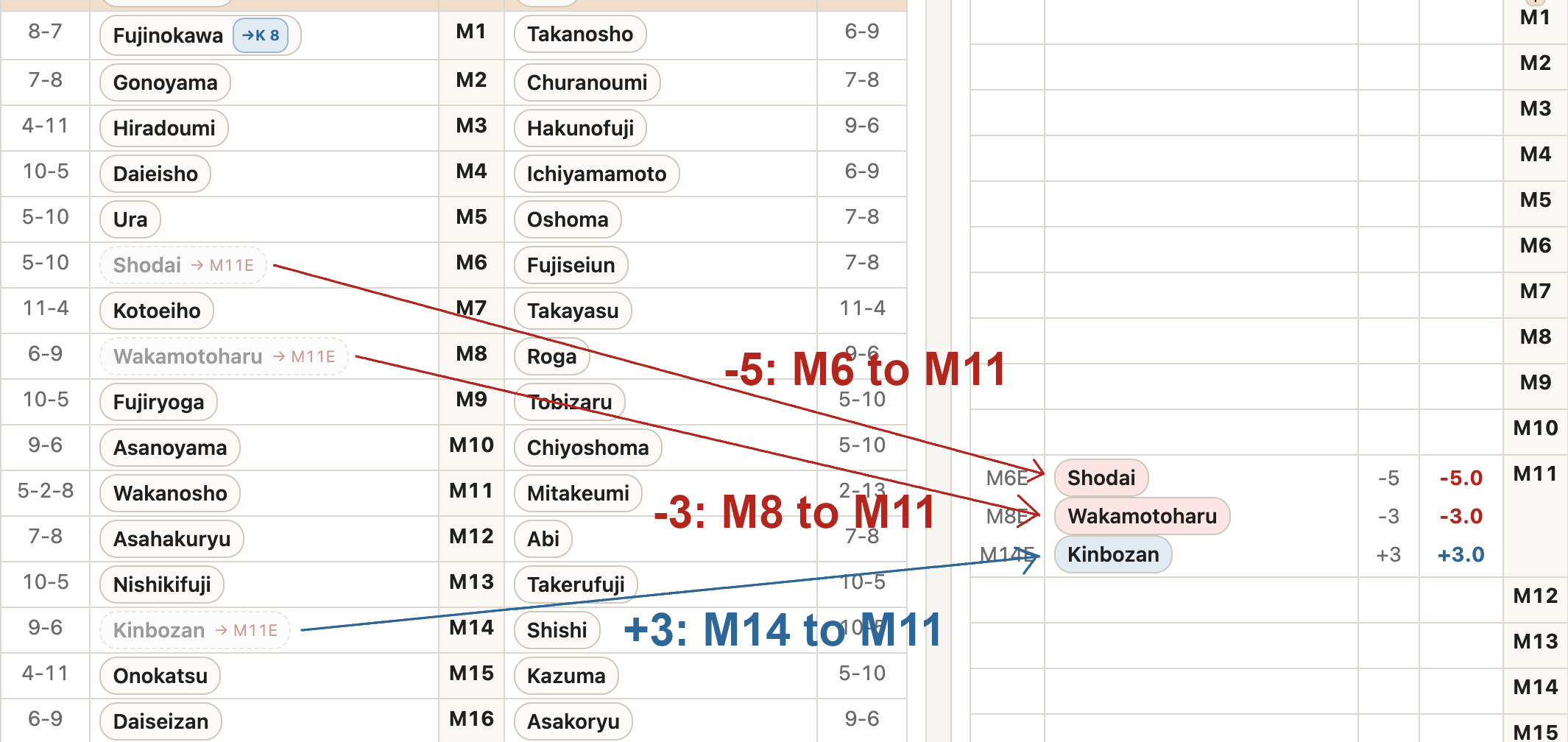
So, the general calculation is that you take a rikishi's net wins in the past tournament and you ideally move up or down by that number of rows. Moving west to east / east to west is considered half a row, so a 8-7 rikishi (+1 net wins) at Maegashira #4 East (M4E) should move to Maegashira #3 East (M3E). A 5-10 rikishi (-5 net wins) at M2W should move to M7W.
However, using this system there are constantly gaps and conflicts. For example, if there's a 8-7 rikishi at M4E and a 9-6 rikishi at M6E, both of these rikishi are supposed to land at M3E. Only one rikishi can hold a slot, so it's up to the Association to decide which of them gets it and what to do with the other guy — it could be under-promotion, over-promotion, and in some cases rikishi simply stay where they already are.
It can also be the case that a slot has no rikishi naturally fall into it. For example, if a rikishi should mathematically be in M2W, but there's no other rikishi available to put in M1W, they may get over-promoted to that slot to make ensure there's not a gap.
Special Rules
The more you move up the titled ranks (sanyaku) the more the normal rules start to go out the window. Below are a few of the main rules, but remember that most "rules" aren't concrete, more like guidelines, and this isn't a comprehensive list:
- Makuuchi always contains 42 rikishi and Juryo always contains 28 rikishi. Each tournament an equal number of rikishi move into and out of these divisions.
- There must be at least 2 komusubi and 2 sekiwake. If these slots get vacated, lower rank rikishi may move up into them like normal. If these slots aren't vacated, rikishi hoping for promotion here may need to achieve a higher level of performance than normal to force a new slot open.
- In order to reach ozeki, a rikishi generally needs 33 wins across 3 consecutive tournaments at the rank of sekiwake or komusubi.
- In order to reach yokozuna, a rikishi generally needs back-to-back tournament wins at the rank of ozeki. A runner-up performance with 12 or more wins is often accepted to count as one of the two required wins.
Lower Divisions
The above rules mainly apply to the top two divisions, Makuuchi and Juryo. Makushita and lower have much more dynamic rank changes with rikishi able to take much larger leaps per win or loss. Luckily for Juryo guessers, promotees from Makushita are announced shortly after a tournament ends.
Banzuke
My Prediction
My Results
Leaderboard
Community Prediction
Click a shikona in the leaderboard to see that prediction.